


Hockey
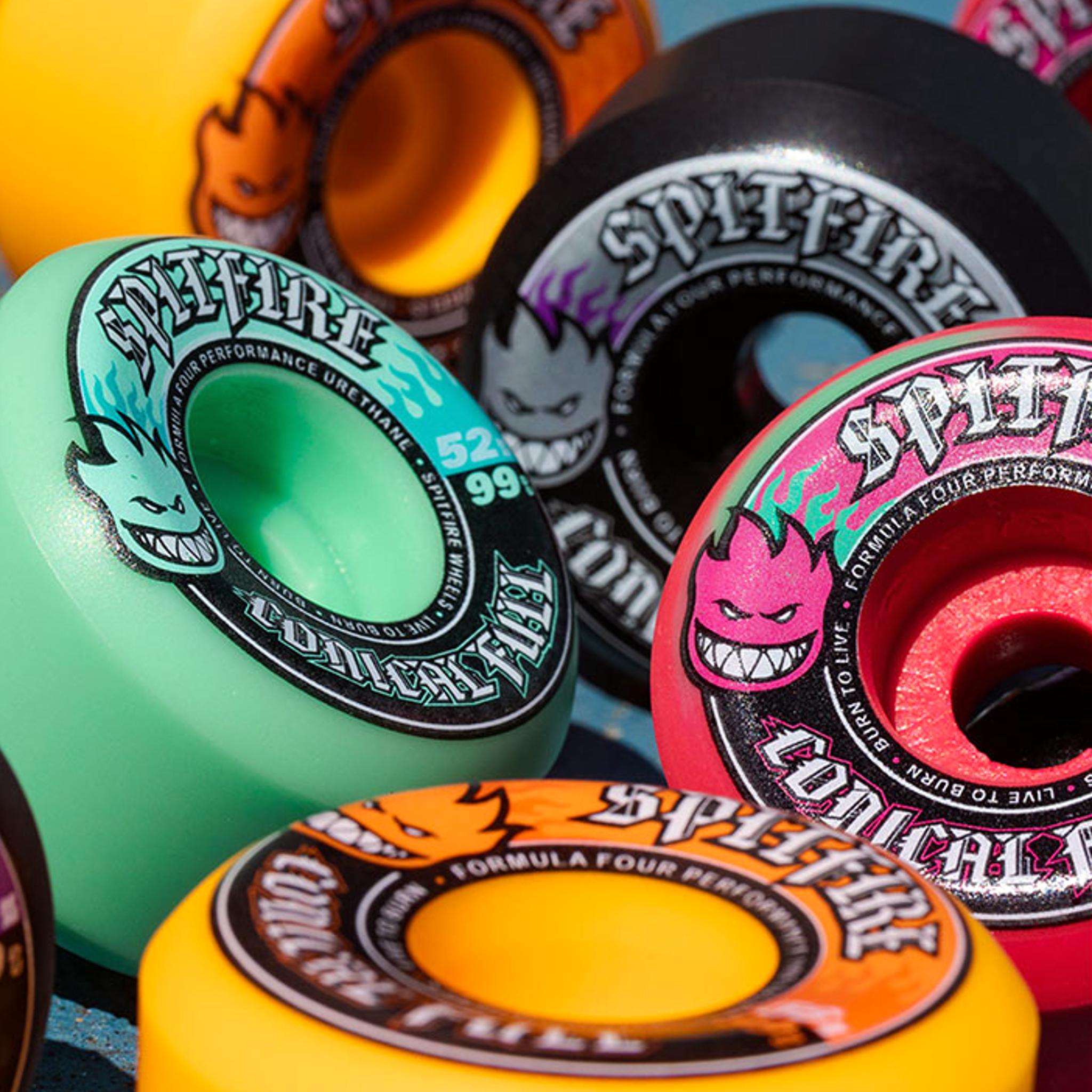
Sptfire Wheels


Hockey Skateboards Playing Card Team

Hockey Skateboards Shadowbox John Fitzgerald

Zero Skateboard Misfits - Zero Business deck Glow

Zero Skateboard Skull Blood Deck

Zero Skateboard Skull Blood Deck

Zero Skateboard lil Reaper deck

Zero Skateboard lil Reaper deck

Anti Hero Austin Kanfoush Medicine

Anti Hero Grimple Stix Dobbie The Untamable

Anti Hero Daan Van Der Linden flat beaut
Best Sellers

Pantaloni Polar Big Boy Mid Blue Jeans Denim

Big Boy Dark Blue Polar Jeans Denim

Polar Stroke Logo Socks White Black

BIG BOY Short Polar Dark Blue

BIG BOY Pants Brown Blue

BIG BOY Work Pants Polar Blue Wash

Polar Skate Light Eight Puffer Brown

Polar 93 Pants Brown Blue

Spitfire Classic '87 Swirl Puffer Jacket

Spitfire 56mm CF Wheels F4 101A

Spitfire 53mm CF Wheels F4 101A

Ruote Spitfire Jeff Carlyle F4 97A Conical Full 58mm

Ruote F4 Spitfire 99A Arson Business 55mm Classics

Spitfire Ruota Torched Script 54mm 99A

Spitfire Torched Script Ruota 52mm 99A

Ruota Spitfire Conical Full F4 56mm 101A

Felpa Girocollo Thrasher X Anti Hero Pigeon Mag Dark Chocolate

Anti Hero Lil Pigeon Jacket Black
Anti Hero Austin Kanfoush Medicine
Anti Hero Grimple Stix Dobbie The Untamable
Anti Hero Daan Van Der Linden flat beaut

Anti Hero Misregist Eagle II Skateboard Deck

Anti Hero Blue Repeater Eagle Completo 8.0"

Felpa Thrasher X Anti Hero Cover the Heart Ash Grey
I Nostri Best seller


Best Sellers

YOW Meraky S5 System Trucks Pack

D Street Surfskate Coda Multi 29"

YOW Surf Skate Pipe Power Surfing 32"

Santa Cruz Surfskate Pink Dot Check 29.95"

Dusters Cruiser Cazh Cosmic Holographic 29.5"

Dusters Cruiser Tropic Pink 29"

Duster Cruiser Yellow Bird Bold 25"

Dusters Cruiser Felix Mood Black Gitd 31"

Ocean Pacific Surf Skate Sunset Navy/Off White 32.25" 9.75"

Duster Longboard Cruisin Chrome Holographic 37"

Santa Cruz Longboard Stranger Things Cruzer Pintail 33"
Santa Cruz Surfskate Pink Dot Check 29.95"
Entra nelle collezioni


Skateboard: Complete Guide and Pleasures Milano Selection
A skateboard isn’t just a board with four wheels—it’s a precise technical system made up of materials, dimensions, and components that directly influence your movements, turns, and tricks.
Understanding which skateboard to choose means starting with the right foundation, because it’s the setup under your feet that determines how quickly you can learn, how much control you have, and how much you can improve.
If you’re here, you’re probably looking for your first setup or want to upgrade to something more technical. In either case, the point isn’t to buy “just any skateboard,” but to assemble a skateboard that matches your skill level and how you plan to use it: street, skatepark, or simply for getting around town.
Pleasures Milano has been working with skateboarding since 1999, from inside the scene, not from the outside. This means we’ve seen materials, shapes, and technical standards evolve, but above all, we’ve tested and selected products in real-world conditions—on the street and in skateparks.
That’s why we don’t base our selection on random commercial choices; we base it on what actually works once you start riding it.
One of the most common mistakes is starting with a low-quality setup or choosing without understanding the differences between the various types. This almost always leads to losing control.
By contrast, starting with the right setup gives you stability, response, and board feel from the very first rides right from the first few rides, making everything feel more natural.
Whether you want to learn your first tricks or simply use the skateboard to move around smoothly, the principle remains the same: you need to build a solid and consistent foundation. From there, everything else follows, including what you can’t buy: style, which is the direct result of how you use the board over time and how well you can truly control it.

Skateboards for Kids: Where to Really Start
Skateboarding is one of the most direct ways to build confidence, coordination, and body control. Every minute spent on the skateboard, every push, and every movement helps develop balance, awareness, and confidence—and that’s exactly what makes this activity so effective from the very beginning.
It’s not just about learning tricks. Skateboarding means freedom of movement, but above all, freedom of personal expression. Every skater develops their own style over time—in the way they move, tackle obstacles, and control the deck. This process can’t be forced, but it always starts with a solid foundation.
If you’re about to buy your first setup, it’s essential to start off on the right foot. One of the most common mistakes is choosing cheap products or those designed as toys, which offer neither stability nor control and make everything more difficult from the very first rides. This not only slows down the learning process but often leads to a loss of motivation.
A quality skateboard, even for a child or a beginner, must have specific technical characteristics: a stable deck, reliable trucks, and wheels suited to how it will be used. This is what allows you to learn naturally, without having to constantly compensate for balance issues or the board’s responsiveness.
For this reason, it’s important to avoid low-quality completes. It’s not a matter of price for its own sake, but of construction and materials. Products that are too cheap behave unpredictably and don’t allow you to develop a solid foundation.
Starting with the right equipment simplifies the entire process. It allows you to focus on your movements, gain confidence faster, and truly understand how the board works under your feet. From there on, the journey becomes much more natural and progressive.
Once you’ve built a solid foundation, the next step is to figure out where and how you’ll use the skateboard. This is what truly shapes your setup choice.

How to Choose the Right Terrain and Setup
There are different types of skateboards, and the choice always depends on where you want to use it. Understanding the terrain is the first step to avoiding mistakes and finding the right board from the start.
If you want to skate street—meaning tricks, jumps, grinds, and urban riding—you should start with a classic popsicle-shaped board. It’s the most common shape because it offers the best balance between control and versatility. With a popsicle deck, you can learn tricks like kickflips, varials, and all the technical basics without limitations.
The popsicle deck isn’t just for the street. It can also be used in skateparks, on ramps, in bowls, and in halfpipes, always maintaining a good level of control. It’s the most versatile choice if you want a single skateboard capable of adapting to different situations.
Over time and with more experience, you can start exploring alternatives like shaped decks. These decks use different shapes—often wider or featuring unique geometries—that offer greater stability and a different feel underfoot. They aren’t primarily designed for flip tricks, but they provide great satisfaction in terms of control and flow.
The real difference comes down to feel. A classic deck is more responsive and technical, while a shaped deck tends to be more stable and forgiving. There is no single “best” solution, only the one that best suits your skating style.
Once you understand the context of use, the next step is the type of configuration. This is where the difference between a complete setup and a custom-built setup comes into play.

Cruiser skateboards and longboards: stability and movement
If your goal isn’t to skate tricks but to get around town or simply enjoy skateboarding in a smoother way, then you should opt for a cruiser skateboard or a longboard.
These models are designed to offer greater stability, smoothness, and comfort. The wheels are softer, the construction is better suited to absorbing vibrations, and the ride is smoother compared to a street skateboard.
Cruisers are compact and practical, perfect for quick trips and everyday use in the city. Longboards, on the other hand, are longer and more stable, ideal for those seeking an even smoother and more controlled ride, especially over longer distances.
There’s no hard-and-fast rule when choosing between a cruiser and a longboard, especially when you’re just starting out. You can safely start with the model that feels closest to your style. The important thing is to understand that a cruiser offers a completely different experience compared to a trick skateboard, one focused more on continuous movement and board control.

Complete or professional skateboard: which one should you really choose?
Choosing between a complete skateboard and a custom-built skateboard isn’t just a matter of price, but of use and goals. The difference lies entirely in the level of control, the quality of the components, and the potential for growth over time.
If you’re just starting out and want to get going right away, a good-quality complete skateboard can be the right choice. It’s already assembled, ready to use, and lets you enter the world of skateboarding without any hassle. The key is to avoid very cheap products, as they often use low-quality materials and unreliable components that make it difficult to even learn the basics.
Complete skateboards from established brands are a good starting point. They offer a balance between quality and simplicity, allowing you to gain control and confidence without overly limiting your experience. Over time, you can customize the setup by changing individual components, gradually improving the board’s performance.
If, on the other hand, you want to build something more precise and personalized, assembling it yourself is the best choice. In this case, you can choose every element: from the deck to the trucks, from the wheels to the bearings, right down to the grip tape. Each component affects how the setup performs, and making informed choices allows you to create a setup perfectly tailored to your style. Learn how to assemble a skateboard from scratch with us.
You’ll feel the difference right away. A properly assembled skateboard offers more stability, responsiveness, and control, especially when you start pushing harder or attempting more technical moves. It’s not just a matter of performance, but of the feel under your feet.
There is no single “right” choice. If you’re just starting out, a good complete skateboard is more than enough to get you going. If, on the other hand, you want to build something that will last you over time, a custom setup is the natural next step.
What matters most is not compromising on quality. A skateboard should work for you, not hold you back. Everything else starts from there. At this point, we’re left with the central element of the entire setup: the deck. That’s where the real control under your feet begins.

Skateboard Trucks: Control, Stability, and Real Response
Skateboard trucks are the connection point between the deck and the ground, and that’s exactly where real control is built. It’s not a secondary component: it’s what determines how you turn, how stable you are, and how much response you have under your feet.
A truck that’s narrower than the deck makes the skateboard more responsive but also more twitchy, while a wider truck increases stability and control, especially when landing. The basic rule is simple: the trucks must be proportionate to the width of the deck. When this balance is right, everything feels more natural.
Another key aspect is the hardness of the bushings, the rubber inserts inside the truck. Softer bushings make turns smoother and more forgiving, ideal for beginners or those seeking freer movement. Harder bushings, on the other hand, provide greater precision and stability at high speeds or during more technical tricks.
The height of the truck also directly affects performance: lower trucks lower the center of gravity and improve stability during tricks, while taller trucks allow for larger wheels and offer more room when turning.
These are details that seem minor on paper, but underfoot they completely change the feel. This is exactly the kind of difference you notice when a skateboard is actually used, every day, on the street and in the skatepark.
Discover the secrets and learn all about your skateboard truck in our guide.

Skateboard Wheels: Smoothness, Grip, and Adaptability to the Ground
The wheels determine how the skateboard rolls on the ground. It’s not just a matter of speed, but of grip, smoothness, and the ability to absorb vibrations.
The first parameter to consider is hardness, measured on the durometer scale. Harder wheels roll better on smooth surfaces and offer greater precision for tricks, which is why they’re the typical choice for street and skateparks. Softer wheels, on the other hand, absorb vibrations better and make riding smoother on uneven pavement, perfect for cruisers and city use.
Diameter also plays an important role. Smaller wheels are lighter and more responsive, ideal for technical tricks and flips. Larger wheels maintain speed better and handle uneven terrain more easily, offering a more stable and consistent feel.
The combination of hardness and diameter defines how the wheel behaves. The wrong wheel can slow you down, make you lose control, or make everything more tiring. The right wheel, on the other hand, allows you to move smoothly and predictably, without having to constantly compensate.
Every contact point with the ground starts there. And when the wheel is right, you feel it immediately: the board glides, responds, and holds its line without hesitation.

Skateboard Bearings: Real Speed and Smoothness Under Load
Skateboard bearings are the component that allows the wheels to spin smoothly. They are often underestimated, but in reality, they have a direct impact on speed, smoothness, and the continuity of movement.
A good bearing must not only spin fast in your hand but also maintain smoothness under load—that is, when you’re actually using the skateboard. That’s where you feel the difference between a cheap component and one that’s well-built.
The most well-known rating is ABEC, but on its own it’s not enough to assess true quality. What matters much more is the construction, the materials, and the bearing’s ability to withstand dirt, moisture, and continuous use. Low-quality bearings tend to lose speed quickly and require more pushing, making everything less smooth.
A well-made bearing, on the other hand, maintains its smoothness over time, allows you to make better use of every push, and makes the skateboard more efficient in its movements. It’s not about going “faster,” but about having a cleaner, more continuous motion.
It’s one of those things you notice right away as soon as you start using the skateboard: if the bearings work well, everything flows effortlessly. If they don’t, you’ll feel it with every push.

Skateboard: Choosing the Right Deck
Choosing the right skateboard is one of the most important factors in determining how you’ll feel while skating. It’s not just a matter of aesthetics or brand, but of dimensions, proportions, and how the deck responds under your feet. Even a difference of just a few millimeters in width can completely change stability, control, and the ease of executing tricks.
Professional skateboards, when selected from the right brands, share very high production standards. We’re talking about multi-ply Canadian maple construction, precise pressing, and geometries that have been refined over time. This means that the real difference isn’t so much “which brand is better,” but which size and shape are best suited to your skating style.
In our catalog, we select only brands that manufacture in the world’s best factories, where material quality and production consistency are monitored at every stage. This guarantees you a reliable deck with the right flex and predictable response—no surprises.
The starting point, however, is always the same: the deck’s width. It’s the first factor to consider when you don’t know what to choose, because it directly affects balance, stability, and ease of movement.

How to Choose Your Deck Width Based on Your Foot Size
When it comes to skateboards, width is the most important factor to consider. It directly determines your balance and how you control the skateboard from the very first ride.
The wrong deck can make everything harder, while the right one lets you progress naturally, without having to constantly compensate for setup mistakes.
When you step onto the deck, everything starts there: the width under your feet, how the deck responds to pressure, stability when landing, and how easily you can control your movement. Even a few millimeters make a difference.
A deck that’s too narrow can feel unstable, while one that’s too wide can slow down your movements and make tricks more tiring. That’s why choosing the right size isn’t just a detail—it’s the foundation on which you build everything else.
Here’s a simple, practical chart to help you make your choice:
Shoe size → Recommended deck width
34 – 40 → 7.25 / 7.5 / 7.75 / 8.0
39 – 41 → 7.75 / 8.0 / 8.125
40 – 43 → 8.0 / 8.125 / 8.25
44 – 47 → 8.25 / 8.375 / 8.5 / 8.6
These guidelines aren’t strict rules, but a practical starting point. The final choice also depends on your style: if you prefer a more technical and fast-paced skate, you can go with narrower widths; if, on the other hand, you’re looking for stability and confidence, it’s better to opt for wider widths.
These guidelines aren’t hard and fast rules, but a practical starting point. The final choice also depends on your style: if you prefer a more technical and faster skateboard, you can stick with narrower widths; if, on the other hand, you’re looking for stability and safety, it’s better to go for wider boards. Check out our tips on how to skateboard.
In the world of skateboarding, there are many different setups, and understanding which components to use completely changes the feel under your feet.
From surfskates designed to simulate the motion of surfing to longboard trucks built for greater stability at high speeds, every setup is designed for a specific use.
Even longboard wheels have different characteristics compared to classic skateboard wheels, offering more grip, smoothness, and comfort over long distances. To improve control and safety, it’s also important to choose high-quality skateboard pads and skateboard helmets, especially in the early stages or when riding in skateparks, bowls, and more technical ramps.

Pleasures Milano Skateshop: Over 27 Years of Real-World Experience
Pleasures Milano was founded in 1999 and since then has never stopped doing one thing: living skateboarding every day, on the ground, without shortcuts. We didn’t start online, and we aren’t built on marketing. We grew up within the scene, in direct contact with those who truly skate, testing products, getting setups wrong, and understanding over time what works and what doesn’t.
In over twenty-seven years, we’ve seen materials, shapes, trends, and distribution change, but one thing has remained the same: the difference between a well-chosen skateboard and a poorly chosen one is immediately felt under your feet. This is where our selection comes from. Every product you find in our catalog is there for a specific reason: because we know it, we’ve seen it work, and we know who it’s suited for.
Over time, we’ve become a go-to destination for skaters of all levels, from those starting from scratch to those who’ve been skating for years and are looking for a more precise setup. Not because we say so, but because those who come to us—online or in-store—come back when they need something that really works.
Pleasures Milano isn’t just a store; it’s continuity. Different generations sharing the same approach: skateboarding lived, not just described. This means a curated selection, practical advice, and no compromises on quality or consistency.
Whether you need to choose your first setup or want to upgrade your current one, we’re here for that. We’ll help you find the right solution, without overcomplicating things or wasting your time on products you don’t need.
That’s the difference you feel when skateboards are tested every day, on the street and in skateparks, not just evaluated on paper.